\n
Merker Handle etter behov Handlekurv

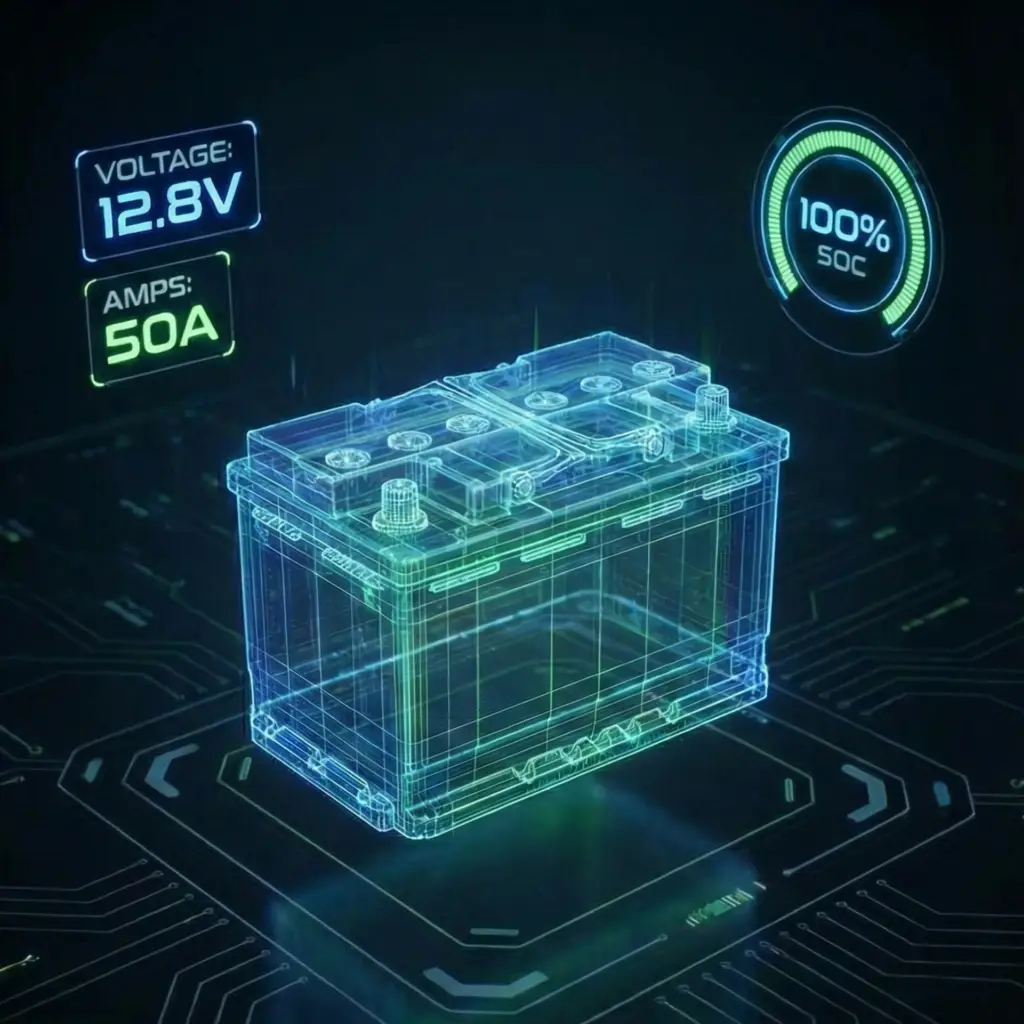
Battery Simulator

Safely test dangerous scenarios in our simulator.

⚠️ WARNING: Digital simulation only. Never attempt this on physical batteries.
Interactive risk simulator for boats

What happens when the battery, charger or BMS gets it wrong?

This simulator shows why battery type, charge profile, temperature, BMS and critical loads must be designed as one system. The goal is simple: VHF, navigation lights, bilge pump and navigation must never lose power when you need them.

Lead, AGM, GEL and LiFePO4 BMS / ATC / ATD / balancing Charge profile and temperature Black-ship risk

Choose a situation

Use the scenarios first. They show common faults and safe principles without requiring the user to understand every battery parameter.

Critical loads to assess

Consequence

OK

Safe system logic

Choose a scenario and start the simulation. The goal is to show what happens to the power supply and critical functions.

Battery: stableWithin the normal operating range.
Charging: controlledThe charge profile suits the scenario.
Loads: poweredCritical circuits are not disconnected.
Battery / BMSNormal operation
Critical loadsVHF, navigation lights, bilge pump

What does this mean?

A good installation is not just about battery capacity. It is about what happens when something goes wrong: cell voltage too high, cell voltage too low, charging when too cold, the wrong charge profile, or a BMS disconnect.

Voltage / net current
12.20V / 0.0A
Temp / pressure / time
20°C | 0mb | 0h 0m
SOH / Ri
100% (0mΩ)
Bulk
Abs
Float
Store
0 mb
C4
3.20
C3
3.20
C2
3.20
C1
3.20
VENT
ATC
ATD
BAL
OVP
UVP
TMP
50%
BMS HAS DISCONNECTEDCritical loads may be without power
● Voltage ● Charge ● Load ● Net
Temp. compensation

Why battery simulation matters on a boat

On a leisure boat the battery is not just comfort. It can supply VHF, navigation lights, bilge pump, navigation, autopilot and other safety-critical equipment. Poor system design can therefore have consequences far beyond low voltage.

LiFePO4 and BMS disconnection

A LiFePO4 battery with an internal BMS can disconnect charging or discharge on overtemperature, undertemperature, over-/undervoltage or cell imbalance. If every load sits behind the same disconnect, critical circuits can lose power at once.

Lead, AGM and GEL

Lead-based batteries react differently from lithium. The wrong charge profile, high temperature or overcharging can cause gassing, pressure build-up in VRLA batteries, venting and permanent loss of capacity.

Important: The simulator is an educational model to illustrate principles, risk mechanisms and typical system faults. It does not replace engineering, measurement, verification against datasheets or inspection of the actual installation on board.

Unsure whether the power supply on your boat is safe?

Get the battery, charging, BMS, critical loads, cable sizing, protection and system architecture assessed before the fault happens at sea.

Contact Sikkerhet Om Bord

Technical Insight & Glossary

Charging Stages

Bulk: Maximum current. Absorption: Constant voltage topping. Float: Maintenance.

SOC & SOH

SOC: State of Charge (0-100%). SOH: State of Health (Degradation).

DVCC Control

Communication between battery and charger. Prevents BMS emergency shutdowns.

C-Rate

The rate of charge/discharge relative to capacity. 1C on 100Ah = 100A.

LiFePO4 Safety

Lithium Iron Phosphate is thermally stable and does not catch fire if punctured or overcharged.

Peukert's Law (Lead Acid)

Describes how a lead-acid battery's capacity decreases the faster it is discharged.

Marine Installation Requirements

According to ISO 13297 and international maritime standards, lithium systems must have protection that disconnects current at critical values. Using correct fuses (e.g., Class-T) and a BMS is not optional – it's a requirement for safety.

Interaktiv batterisimulator for båt: Digital 3D-modell som viser litium vs AGM lading, BMS-sikkerhet og spenningsovervåking.